
The sun dips below the pixelated horizon in Terraria, and the air chills with a familiar, unsettling presence. For a new adventurer, those first moments aren't just daunting – they're downright terrifying. Hostile creatures, from the shuffling undead to otherworldly horrors, begin their nightly patrols, making every shadow a potential threat. The game seems to whisper, 'Find shelter, or become part of the landscape.' Unlike simply ducking into a cave in some other survival games, Terraria has its own, very specific ideas about what makes a place a home. It’s not just about four walls; it’s about creating a sanctuary that the world itself recognizes, a beacon of safety where not only you but also helpful town NPCs will gladly settle.
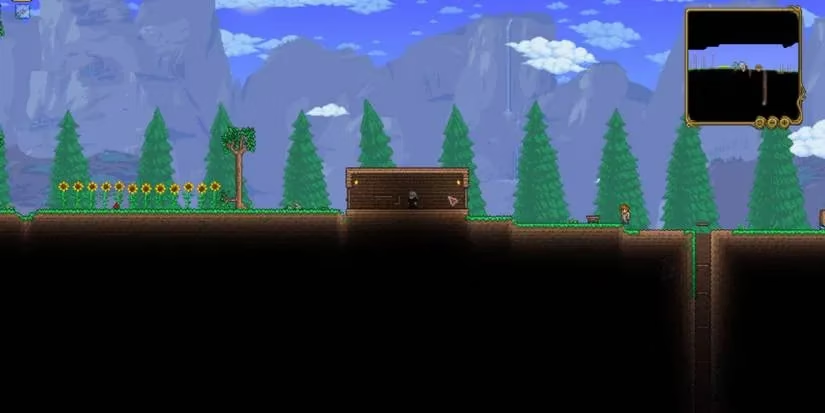
Laying the First Foundations
Your survival journey begins with the basics: gathering materials. Dirt and wood are your best friends in those initial hours, available in abundance across the surface world. With a trusty axe and pickaxe, you can quickly amass enough blocks to sketch out the skeleton of your first refuge. This initial frame is your lifeline against the first night’s terrors. But here’s the catch Terraria throws at newcomers: a frame alone is just a fancy cave. The real magic (and necessity) lies in the background walls. You must craft and place wall tiles to cover the entire interior background of your structure. And you’ve gotta be thorough! Any gap, even a single tile missing, is like leaving a welcome mat out for monsters—they can and will spawn right inside your would-be safe haven. Talk about a housewarming party you didn't want!
The Official "House Rules"
So, you've got walls and a roof. But will Terraria's Housing Authority give you the stamp of approval? To be officially recognized as a valid house (or what the game calls "suitable housing"your build must meet a specific checklist. Think of it as a building code for a fantasy world.
1. Size Matters: Your house must be cozy but not cramped, spacious but not a mansion (at least for NPC purposes).
-
Minimum: At least 60 tiles in total area (counting the enclosed space, including the blocks that make up the walls and ceiling).
-
Maximum: No more than 750 tiles.
-
A simple starter house could be 10 tiles wide and 6 tiles high (60 tiles exactly).
2. The Essential Furnishings: A house isn't a home without a few key items. You need to place three specific types of objects inside:
-
A Light Source: A simple Torch stuck on a wall is perfect.
-
A Flat Surface Item: This is your "workstation." A basic Table or a Work Bench will do.
-
A Comfort Item: Something to sit on. A basic Chair is all you need.
-
Fun Fact: The comfort item doesn't have to be used for sitting; it just needs to be placed in the house!
3. The Grand Entrance: At least one functional door is non-negotiable. This connects your private sanctuary to the big, scary world outside.
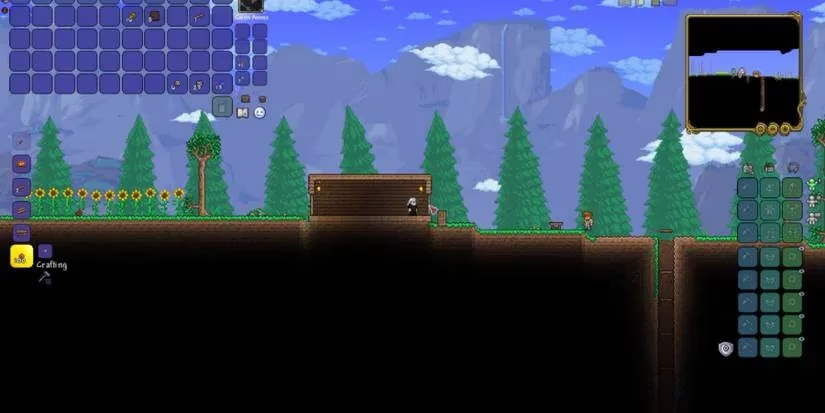
Once these conditions are met, the house becomes a functional base! You can set your spawn point here, use the crafting stations, and most importantly, attract NPCs who will move in and offer their services, from selling goods to providing valuable advice. It’s a game-changer.
Pro-Tips for Efficient Homesteading
Building doesn't have to be a solo, isolated project for each house. One of Terraria's best-kept secrets for efficient base-building is that houses can share walls and ceilings. This means you can build a long, horizontal row of rooms, each separated by a single wall or platform, and the game will count each enclosed room as a separate, valid house. This is the secret to creating compact, easy-to-manage NPC villages or player bases. You can have a whole neighborhood on a single screen!
Here’s a quick comparison of a solo house vs. a connected neighborhood:
| Building Style | Solo House | Connected Neighborhood |
|---|---|---|
| Resource Use | Higher | Much lower (shared walls!) |
| Space Efficiency | Lower | Excellent |
| Ease of Access | Can be scattered | All NPCs in one convenient row |
| Aesthetic | Standalone charm | Village or apartment complex vibe |
The Housing Inspection Feature
You’ve built something you’re proud of, but is it home? Don't guess! Terraria has a built-in housing inspection tool. Simply:
-
Open your inventory.
-
Click on the house icon (the "Housing" menu).
-
Click the "?" (Query) button.
-
Click inside the room you want to check.
The game will instantly give you feedback. A green checkmark and a message like "This housing is suitable" means you've succeeded! If something is wrong, it will tell you exactly what's missing—"This is missing a wall," "Missing a light source," etc. It’s your best friend for troubleshooting.
Why It All Matters
In the end, building a proper house in Terraria is about more than just surviving the night. It’s the foundation of your entire journey. Your base becomes:
-
Your Safe Haven: Your spawn point is here, letting you recover from any unfortunate demise.
-
A Crafting Hub: With multiple stations, you can forge better gear, potions, and building materials.
-
Storage Central: Chests organized here keep your precious loot safe.
-
A Thriving Community: As NPCs move in, they bring unique items, services, and life to your world.
So, as you stand on that first night, listening to the groans of zombies outside, remember: with some wood, a few torches, a table, and a chair, you're not just building a box. You're building a home, a headquarters, and the first chapter of your legend in the ever-evolving world of Terraria in 2026. The adventure truly begins once you have a door to close behind you.
The content is derived from articles by Kotaku, a leading source for gaming news and community insights. Kotaku's coverage of sandbox games like Terraria often emphasizes the importance of player creativity and strategic planning, especially when it comes to building effective bases and fostering thriving in-game communities.