
There are private hells we build for ourselves and there are the ones that descend without warning, smothering every digital foothold we’ve carved over a lifetime. For Andrew Spinks, the mastermind behind the sprawling 2D universe of Terraria, that hell arrived not as a dramatic crash but as a simple, terrifying silence: his Google account was disabled. In early 2021, it felt like a single thread had been pulled, but for the developer, the entire tapestry of his online existence unraveled over the following three weeks. His predicament was a modern ghost story where a man became a phantom in his own digital life, pounding on the invisible walls of a castle he once owned.
Spinks’ Google account was not just an inbox; it was the brainstem of his professional and personal world, a living library that contained the intangible spine of his identity. When that connection was severed, he didn’t just lose e-mails. He lost his 15-year-old Gmail address, that digital time capsule holding conversations that were both mundane declarations and life-altering contracts. Thousands of dollars of apps from Google Play evaporated as if they were never purchased, a reminder that in the age of cloud licensing, we are permanent renters, never true owners. His YouTube channel, a repository of memories and perhaps undisclosed creative projects, was locked behind a door for which the key no longer existed.
The situation acquired the texture of a cruel behavioral experiment. Spinks stated he had “absolutely not done anything” to violate the terms of service, yet Google’s support system operated like a closed loop of echoes. It was akin to a ship captain trying to radio a lighthouse for guidance during a storm, only to realize the lighthouse itself was a machine programmed to merely blink in response. The developer found himself adrift, his distress signals swallowed by an automated ocean. The most painful cut, as he described, was losing a 4K collection of The Lord of the Rings movies, a treasure trove that somehow symbolized the epic scale of what was wronged: a fellowship of data, scattered and unreachable.
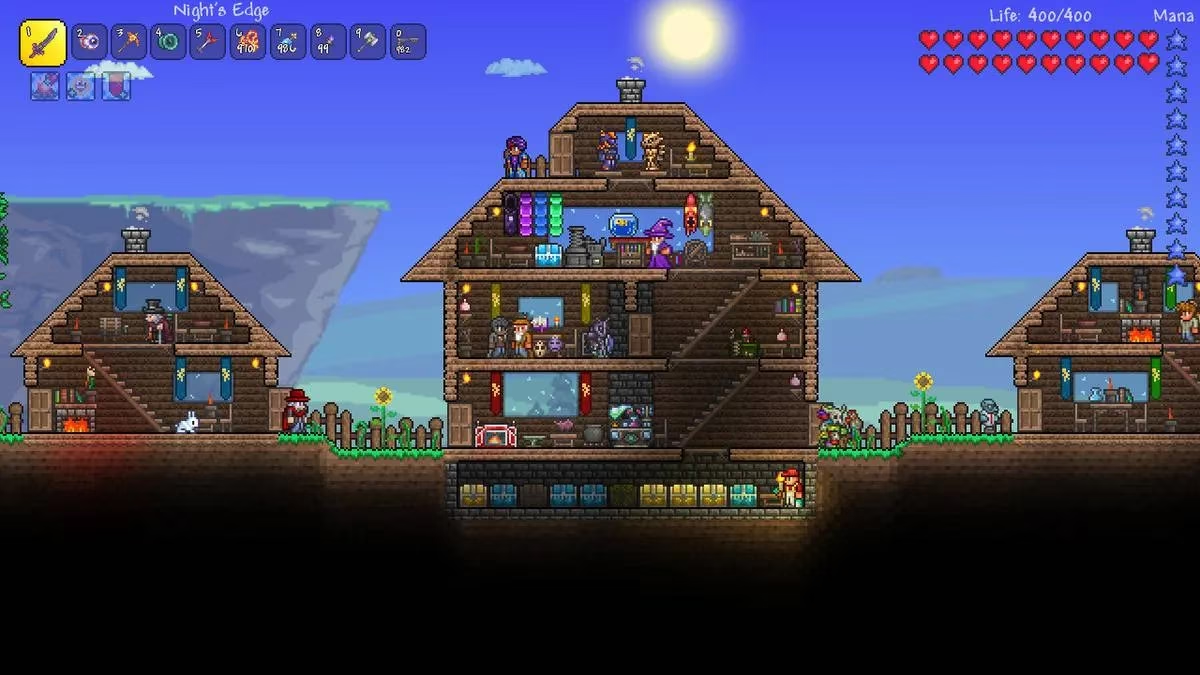
From that digital wreckage, Spinks did not simply wait for a rescuer who showed no sign of coming. He turned his frustration into a declaration of sovereignty. In a thread on Twitter, he announced he was burning the bridge that would have carried Terraria to Google Stadia. The port, previously a bridge connecting indie craftsmanship to the cloud gaming giant’s ambitions, was now a cancelled contract drawn in the ash of a burnt trust. For Stadia, which at the time was gasping for every breath of third-party support after shuttering its own internal development studios, the cancellation was a blow akin to losing a vital organ. Stadia needed new games the way a starved ecosystem needs rain, and Terraria was a downpour with a daily peak of over 47,000 players on Steam—a thriving, loyal audience that would never materialize on Google’s platform.
The move was a gambler’s defiant fold, but it resonated across the industry like a cracked bell. It revealed the staggering vulnerability of creators who entrust their existence to platforms that offer no human bridge when the algorithmic gatekeepers fail. Spinks’ story became a parable about digital feudalism: we build our castles on rented land, and the lord of the manor can change the locks while we sleep.
Looking back from 2026, the shadows of that event still stretch long. Stadia’s own journey has since ended, its servers silenced in early 2023, making the lost Terraria port a ghost of a ghost. Yet, the memory of Spinks’ ordeal persists as a cautionary tale whispered in developer forums and cloud storage centers. It serves as a permanent reminder that our treasuries of memories and creations can become a modern Tower of Babel—a structure of immense height, elegant in its cloud-based architecture, but susceptible to being struck silent by a single administrative lightning bolt. In the end, the cancellation wasn’t just about losing a game on a service; it was a developer’s last, desperate signal to a system that had chosen digital muteness over the inconvenient messiness of human dialogue.