
Holy smokes, it’s 2026, and the survival genre has exploded into a glorious, merciless beast that devours players whole and spits them out begging for more. From the neon-drenched nightmares of cyberpunk wastelands to cozy farming sims with a dark twist, the market is flooded with titles screaming for attention. But let’s be real—while the masses are still grinding the latest AAA blockbuster that holds their hand with waypoints and regenerating health, the true connoisseurs know that the real adrenaline lives in the overlooked masterpieces, the hidden gems that redefine what it means to stay alive. These aren’t just games; they’re brutal life simulators that chew you up, steal your loot, and make you say thank you. Buckle up, because we’re diving deep into the most criminally underrated survival experiences that every self-respecting gamer needs to play right now, no ifs, ands, or buts.
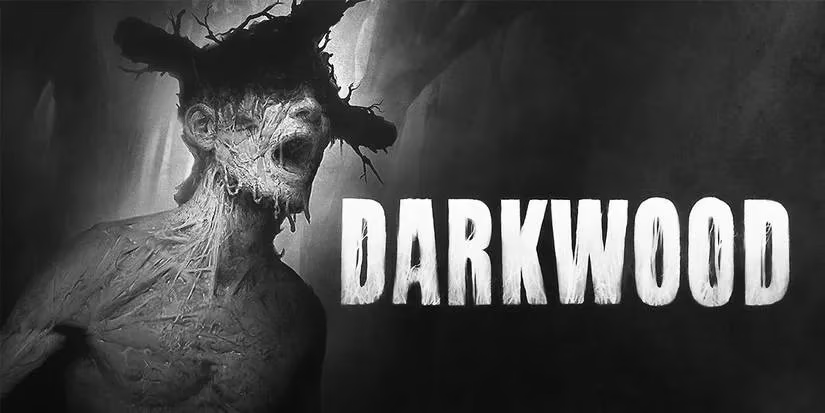
Let’s kick things off with Darkwood, a top-down survival horror that doesn’t just break the mold—it sets the mold on fire and dances around the flames. This Polish hellscape ditches the tired first-person jump-scare formula and replaces it with pure, unadulterated dread. By day, the player scavenges through a randomly generated, grotesque forest full of mutated flora and psychotic hermits. But when night falls? Oh boy. Hunker down in a decrepit hideout, board up the windows, and pray the generator doesn’t fail, because the things that slither out of the shadows have zero chill. What makes Darkwood a total game-changer is its RPG-meets-roguelike DNA: you can inject mysterious essences to gain perks, but every power-up might come with a twisted side effect that makes your life a living hell. No hand-holding, no quest markers—just you, your wits, and an atmosphere so thick you could cut it with a rusty axe. In 2026, the game’s cult following has only grown, with modders adding entire new story branches that make the original look like a tutorial.
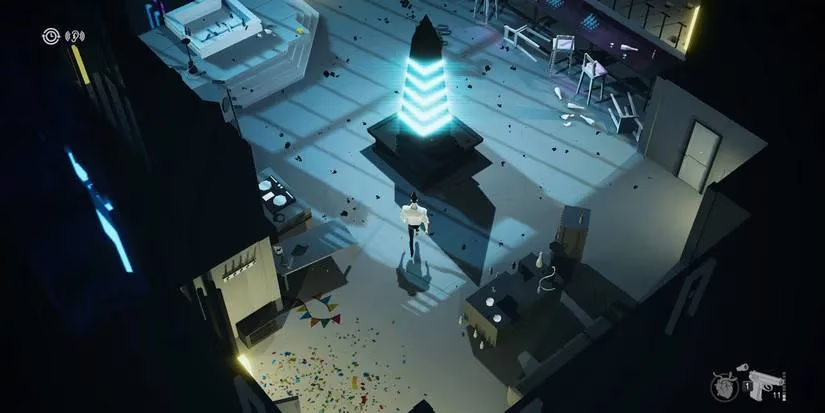
Next up, SKYHILL: Black Mist drops you into a massive, interconnected corporate deathtrap straight out of a fever dream. This semi-open world pits an ordinary employee against a black mist that’s not only corrupting monsters and cultists but also your own flesh and blood. Clock’s ticking, chief—you’re infected, and your daughter is trapped somewhere in this labyrinthine nightmare. The non-linear design is the bee’s knees: you can go full Solid Snake with stealth, set intricate traps like a deranged engineer, or just rambo your way through with brute force. The kicker? Dying actually unravels more of the story, blurring the line between reality and hallucination in a way that would make Philip K. Dick proud. This gem never got the red-carpet treatment it deserved, but veteran survivalists in 2026 still boot it up for the sheer tension of racing against your own expiration date.
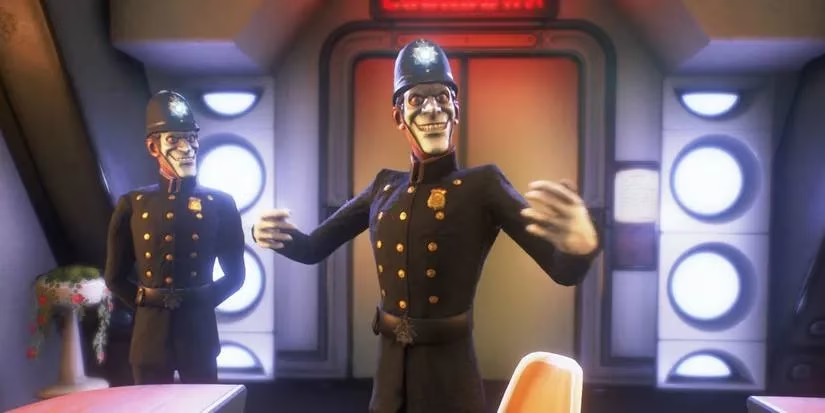
Then there’s We Happy Few, a game so bonkers it wraps survival horror in a retrofuturistic 1960s bow drenched in hallucinogens. Set in an alternate post-war England where everyone is legally mandated to be happy via a drug called Joy, you play as three “Downers” who refuse to pop pills and see the world as it truly is—a crumbling, procedurally generated dystopia where smiling bobbies will beat you senseless for not conforming. The sheer genius here is that survival isn’t just about hunger and health; it’s about social blending. Do you fight the system head-on, sneak through districts like a ghost, or pop a Joy pill to walk right past enemies while your mind melts? The crafting system is deep enough to make a hoarder weep with joy, and no two playthroughs are ever the same. Even in 2026, after countless updates and a full narrative overhaul, this title remains a masterclass in atmospheric storytelling that most people sadly misjudged at launch.
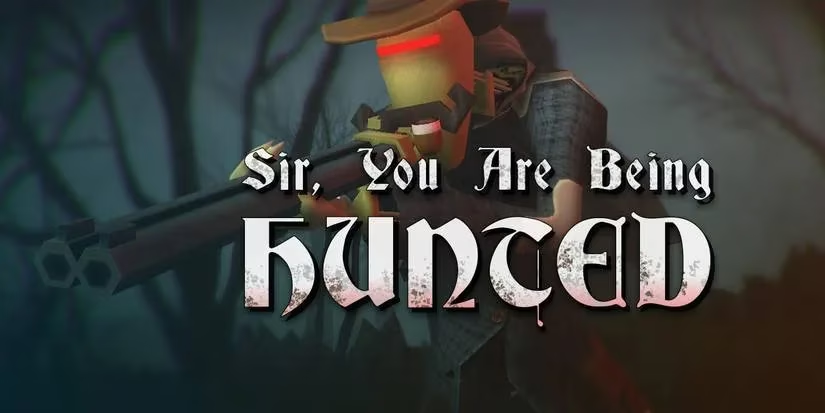
For those with a taste for British absurdity, Sir, You Are Being Hunted is the crème de la crème of underappreciated stealth-survival. Imagine waking up in a procedurally generated archipelago where tweed-wearing, monocle-sporting robots are literally hunting you for sport. No, you didn’t misread that—the robotic aristocracy is relentless, intelligent, and utterly terrifying in their polite murderous persistence. Scavenging for food, crafting crude weapons, and choosing between hiding in a bush or going full guerrilla warfare against a gentlemanly death squad is the name of the game. Your only ally is a disembodied butler voice that offers counsel with the driest wit imaginable. The game’s five distinct biomes and the AI’s ability to track you even after line-of-sight is broken make every session a heart-pounding game of cat and mouse. In the post-2020s landscape, this indie darling remains a benchmark for emergent gameplay, and its aesthetic is so unique it should be studied in art schools.
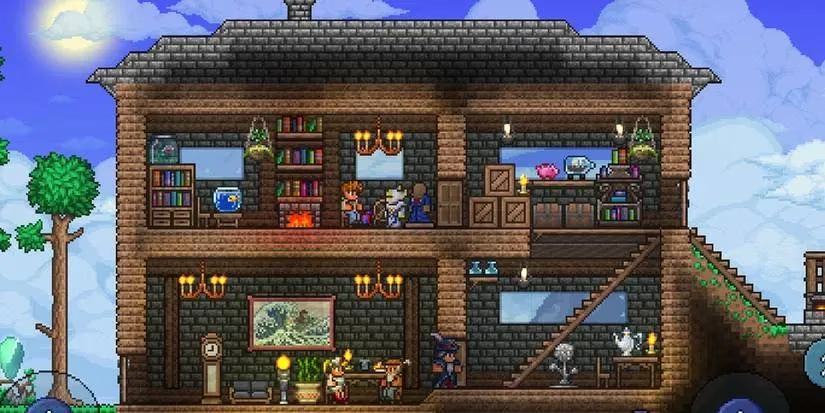
Hold the phone—you think Terraria is just 2D Minecraft? Buddy, you’re in for a rude awakening. This pixelated behemoth is a survival sandbox that punches way above its weight class, blending action-RPG boss fights with base-building, exploration, and resource management so complex it would make an accountant blush. Players dig, fight, explore, and build across a sprawling world filled with biomes ranging from corruption-choked chasms to floating sky islands. The progression is nothing short of addictive: craft a copper shortsword, then gradually work your way up to summoning giant mechanical worms and celestial pillars while your meticulously constructed fortress is besieged by blood moons. What keeps Terraria eternally fresh in 2026 is the borderline insane amount of content—thousands of items, dozens of NPCs, and a modding community that has created full-blown expansions like Calamity, which make the base game look like a warm-up. If you’ve never mined chlorophyte while a giant plant boss tries to eat your face, have you really lived?
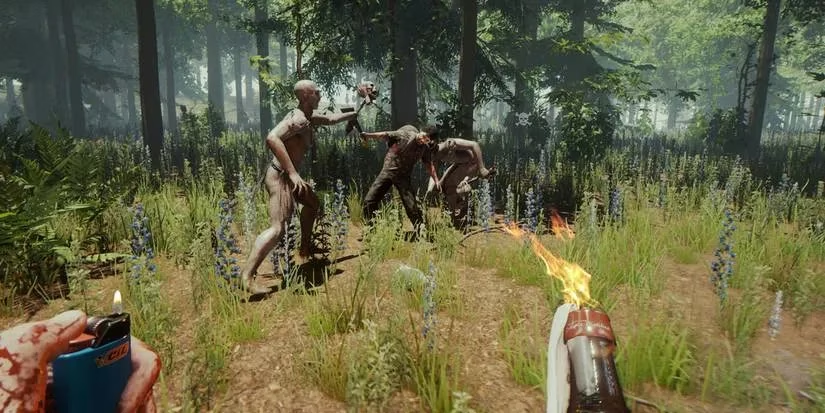
The Forest crashes players into a rugged peninsula where the local welcoming committee is a bunch of cannibalistic mutants with complicated social dynamics. This open-world survival horror hybrid sets you as a plane crash survivor searching for your kidnapped son, but the narrative takes a back seat to the emergent terror of defending your hand-crafted log cabin from nightly raids. The AI is outrageously smart—cannibals probe your defenses, mourn their dead, and even build effigies to intimidate you. By day, you’re a lumberjack architect; by night, a terrified squatter hoping your traps hold. Co-op with up to eight friends turns the horror into a chaotic party where someone inevitably sets fire to the base, and the deep cave systems beneath the island reveal a story so disturbing it makes most AAA horror titles look like kid’s stuff. With its sequel Sons of the Forest already a hit, the original remains a gritty, uncompromising foundation that every survival fan must experience. Pro tip: the crafting system still slaps, and the fear of hearing a distant scream at 2 AM never gets old.
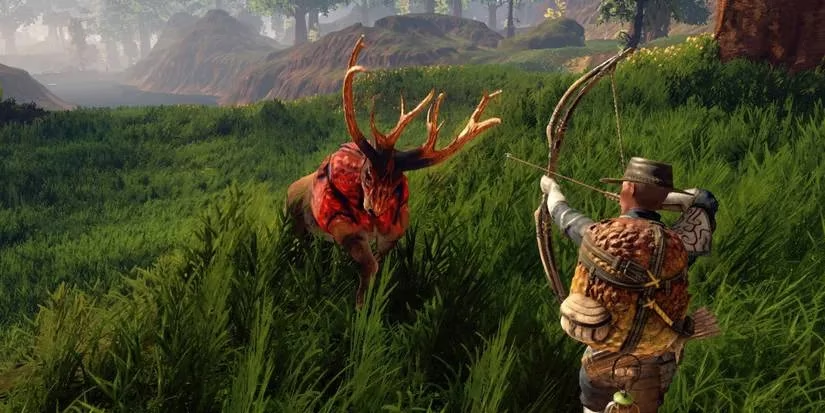
If you’ve ever thought that survival games are too easy, Outward will humble you faster than a dark souls backstab. This immersive RPG drops you into the vast world of Aurai not as a prophesied hero, but as a complete nobody who can barely swing a sword without pulling a muscle. The sheer brutality of its realism is a wake-up call: you need to manage dehydration, hunger, temperature, and diseases, all while dodging bandits and abominations that will wreck your day. There’s no magical fast travel—you hike everywhere with a backpack that you actually have to drop before combat, or else you’ll roll like a drunken ox. The magic system requires literal ritual sacrifice to unlock, and dying doesn’t bring a game over screen; it often results in waking up in a weird scenario like being dragged to a bandit camp and forced to work off your debt. Local and online co-op allow a friend to share the misery, and by 2026, the game’s Definitive Edition has polished the experience into a punishing masterpiece that’s criminally undersung. Stamina management isn’t just a mechanic—it’s a life philosophy here.
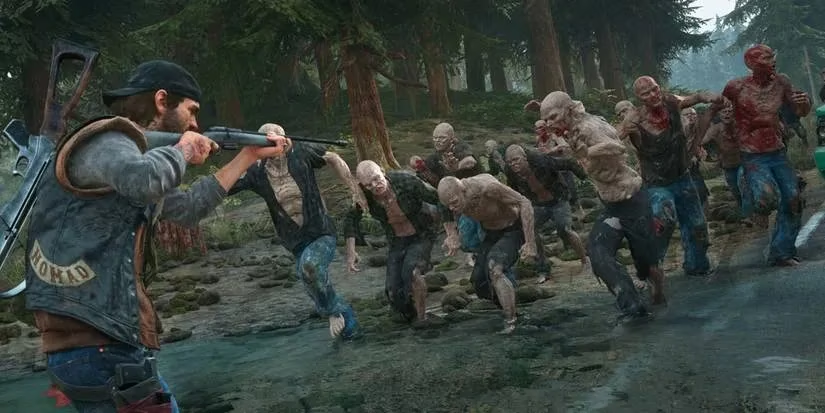
Days Gone might have received a second wind thanks to a stellar PC port and a dedicated fanbase, but it still deserves far more love than it got at launch. This post-apocalyptic Pacific Northwest sets the stage for Drifter Deacon St. John, a biker navigating a world overrun by “Freakers”—zombie-like hordes that behave more like a force of nature than your standard shambling dead. The game’s pièce de résistance is the horde mechanic: hundreds of snarling, sprinting infected that can be tackled only through planning, traps, and environmental explosives. The motorcycle isn’t just transportation; it’s your lifeline, requiring constant scavenging for fuel and repairs, which adds a whole layer of vehicular survival. Human gangs, wolves, and the crushing weight of loss flesh out a narrative that’s surprisingly heartfelt. In 2026, modders have amplified the chaos with infinite horde modes and survival rebalance mods, transforming Days Gone into a sandbox that easily stands alongside the greats. Honestly, where else can you lead a sea of zombies into a sawmill and watch the carnage unfold?
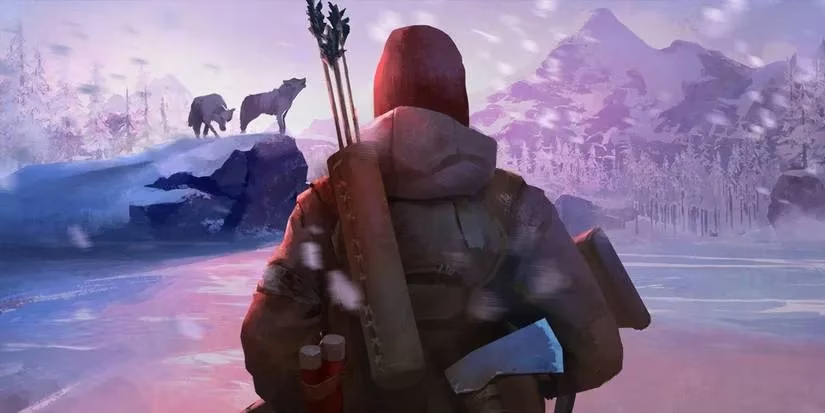
The Long Dark is the silent, frozen punch to the gut that survival sim purists worship. Set in a Canadian wilderness after a geomagnetic disaster wipes out technology, the game’s survival mode is the ultimate “figure it out yourself” experience. Mother Nature is the true antagonist: blizzards, starvation, hypothermia, and wolves that won’t hesitate to turn you into a chew toy. There are no zombies, no mutants—just the raw, indifferent brutality of existence. The art style is like a watercolor painting that wants you dead, and the sound design captures the crunch of snow and the howl of wind with chilling fidelity. The episodic story mode provides context, but the real meat is the free-form survival, where the only goal is to survive another day. By 2026, the game’s years of updates have refined the mechanics to a razor edge, and its hardcore community creates challenges that would make seasoned survivors weep. If you can’t start a fire with a single match and a prayer, you’re not playing right.
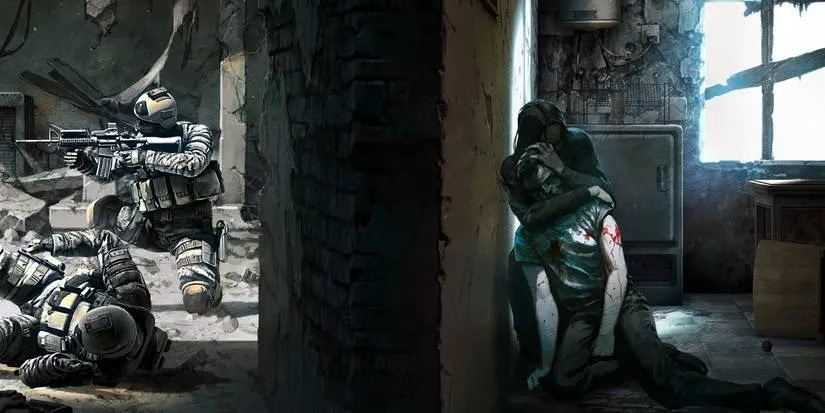
Finally, one of the most important and gut-wrenching entries on this list: This War of Mine. This is survival stripped of glory, placing you in the shoes of civilians trapped in a besieged city. There’s no heroic charge—only desperate scavenging at night while snipers and hostile looters threaten to end your run of hope. By day, you manage a crumbling shelter, craft makeshift tools, and make choices that will haunt you longer than any monster ever could. Starvation, illness, and despair are constant companions, and the game’s expansions only deepen the harrowing narratives of war’s unseen victims. In 2026, its message remains piercingly relevant, and the emotional weight it carries is so heavy that sessions often end not with a win but with a quiet reflection on human fragility. It’s not just a game; it’s an empathy engine that every self-proclaimed gamer should experience at least once. If you finish a run without feeling a piece of your soul crack, you’re probably already dead inside.
So there you have it, a lineup of unsung heroes that prove survival isn’t just about filling a health bar—it’s about enduring the unthinkable with style, grit, and the occasional total mental breakdown. These aren’t just dusty relics from the past decade; in 2026, they stand as towering testaments to what the genre can achieve when developers dare to think outside the loot crate. Dust off your backlog, fire up these bad boys, and prepare to have your socks blown off. Trust me, your inner survivor will thank you.