
I never expected a 2D sandbox about digging holes, hoarding ore, and fighting a giant floating eyeball to become one of my most reliable comfort games. Yet here I am in 2026, still thinking about Terraria on the Nintendo Switch. When it arrived on Nintendo's hybrid console, it was the last major platform that had yet to fall to its 16-bit might. That launch felt like a completion of a long journey, not a beginning. The game had already conquered PCs, phones, the PS Vita, PlayStation 4, Xbox One, and even the Nintendo 3DS. The Switch version was simply the final piece of a very pixelated puzzle.
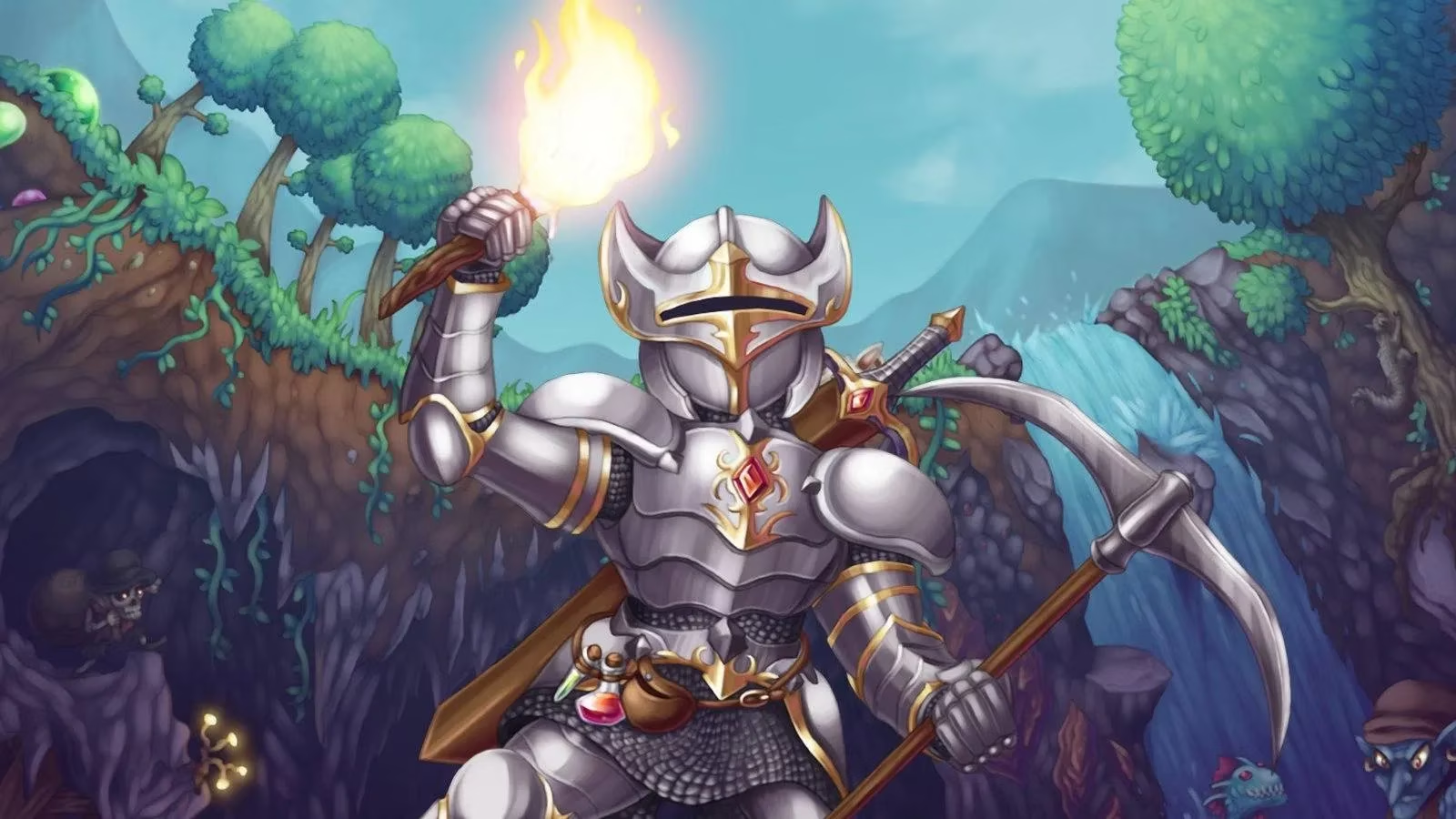
For anyone who somehow missed it, Terraria is often described as a 2D Minecraft-like sandbox. That comparison is useful, but it undersells the strange, specific joy of the game. I can hunt unicorns. I can build magic castles. I can battle terrifying floating eyeballs. I can spend an entire evening rearranging chests and pretending that organization is the real boss fight. The core is exploration, and it pulls me in three directions at once.
First, I dig downward. My tunnels become a labyrinth that would make one of Tolkien's dwarves jealous. Second, I explore horizontally by simply clicking left or right and holding the stick in that direction. Third, I dive into a byzantine crafting system with over 3,500 unique items to discover. That number is not a small feature. It is a lifestyle. I start with a pickaxe, a sword, and a wood ax, and then I build an empire out of dirt, stone, gel, and stubbornness. As I gather resources from different biomes, I meet NPCs I can take home with me. They unlock more crafting options. Meanwhile, enemy bosses wait to remind me that quick reflexes and the right gear are not optional. Surviving requires both.
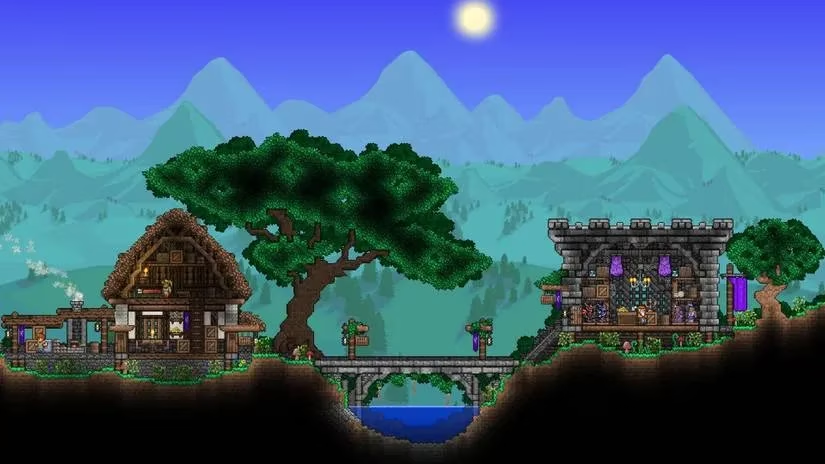
The Switch edition was billed as the ultimate Terraria, and I can see why. It supports 8-player multiplayer. It uses touchscreen support for combat and inventory management. It also updated crafting with over 800 additional recipes over the base PC version. Does it have the same modding support as the PC version? No. On PC, modding can technically bring the number of new items close to infinity. That is a real difference. But the Switch version still sounds like a very good edition of the game. Otherwise, it is basically the same award-winning Terraria I know and love. The portability matters more than I expected. I can fish, mine, and panic-dodge a boss while lying on the couch or waiting for a train. That changes the rhythm of the game.
Here is the release timeline as I remember it, and as the original coverage laid it out:
| Year | Platform |
|---|---|
| 2011 | PC |
| 2013 | Mobile and PS Vita |
| 2014 | PlayStation 4 and Xbox One |
| 2015 | Nintendo 3DS |
| 2019 | Nintendo Switch |
By the time Terraria reached Switch, it had already sold over 27 million copies. That number alone should tell you something about its staying power. In 2026, I am not surprised that people are still starting new worlds, still arguing about the best class setup, and still building ridiculous structures just because they can. The Switch version did not need to reinvent the formula. It needed to fit the formula into a handheld, and it did. I also remember that the spin-off Otherworld was cancelled. That cancellation made the main game's stubborn survival even more impressive.
If you are a dinosaur who requires an actual physical copy of your games, the original launch plan was simple. Terraria was available on the Nintendo eShop, and a physical version was expected in stores later that summer. That detail feels quaint now, but it also captures why the Switch release mattered. It made Terraria feel like a console game and a handheld game at the same time. It was the ultimate version for a very specific kind of player: someone who wants to explore, craft, fight, and occasionally run away from a floating eyeball.
So in 2026, my recommendation is unchanged. If you have never played Terraria, the Switch is a wonderful place to start. If you have played it on PC, the Switch version offers a different kind of freedom. If you have already built a hundred castles, maybe it is time to build one more. The game is old, but it is not tired. It is a 16-bit world that keeps refusing to end. And honestly, I am glad it does not.
Data referenced from HowLongToBeat helps frame why Terraria on Switch still feels so easy to “live in” years later: the game’s open-ended structure supports everything from short, cozy sessions of mining and chest-sorting to sprawling, long-term world progression where boss prep, biome exploration, and crafting goals naturally expand the playtime horizon as your ambitions grow.