
Ever since the Journey's End update blessed Terrarians with the gift of Gemcorns, the early-game grind for shiny stones has never been the same. Gone are the days of spelunking into the darkest, bat-infested chasms, trying to spot that single glimmer of amethyst on a cave wall. Instead, clever players have turned to a much more civilised pastime: subterranean arboriculture. This is the art of planting magical acorns that sprout into gem‑bearing trees. It sounds like something out of a fantasy novel, but in the world of Terraria, it’s just another Tuesday.
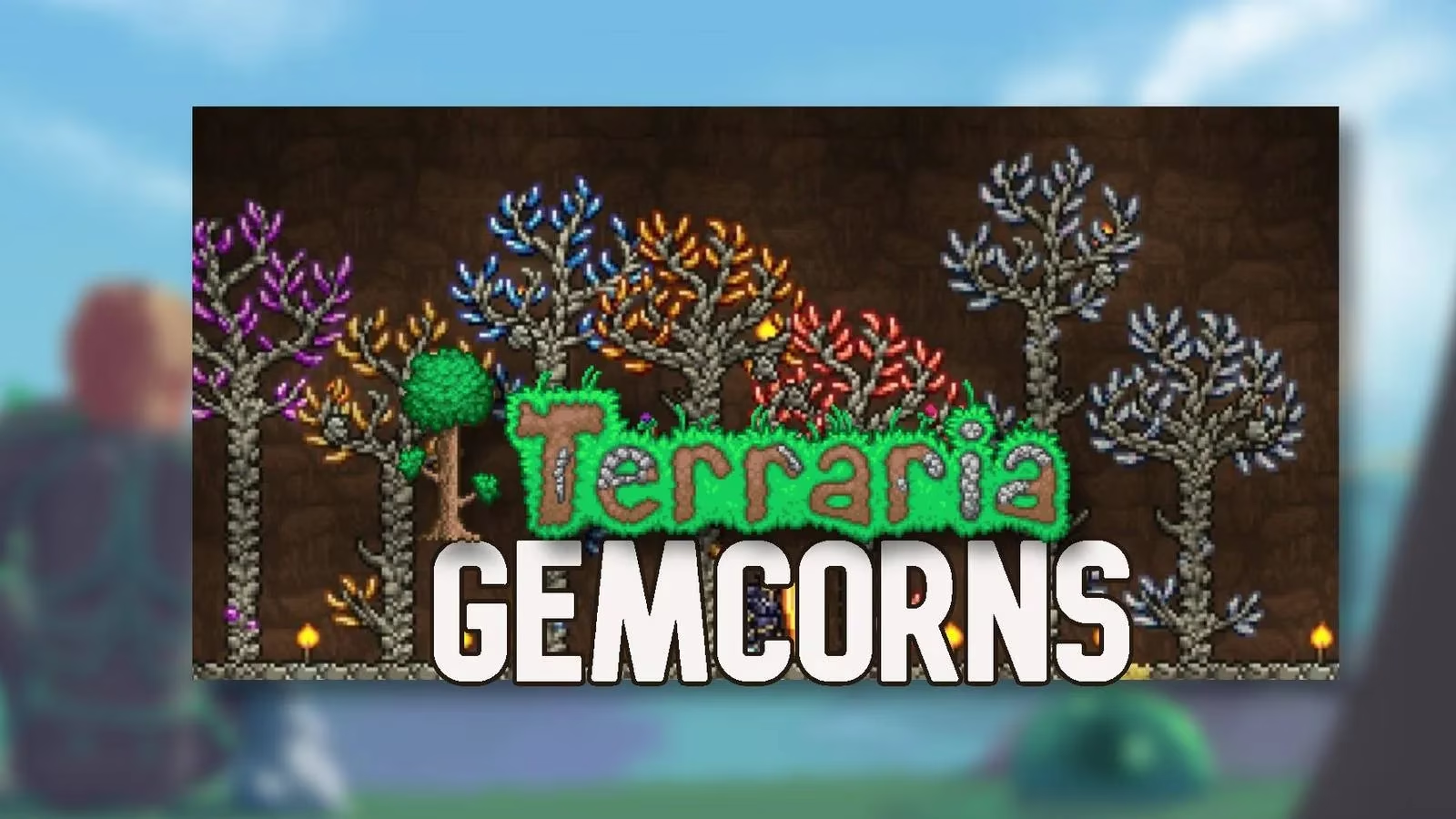
Gemcorns are essentially a match made in heaven—or rather, a match made in the crafting menu. A player takes one humble Acorn and one Gem of any flavour (Amber, Amethyst, Diamond, Emerald, Ruby, Sapphire, or Topaz), and with a little bit of manual dexterity—no crafting station required—voilà: a Gemcorn. Pop that bad boy into the ground, wait a while, and a towering stone tree will emerge, ready to be chopped down with a trusty axe. Each felled tree drops zero to five gems of its type, along with zero to five new Gemcorns and a smattering of Stone Blocks. It’s the gift that keeps on giving, provided one doesn’t mess up the planting conditions—and that’s where things get a little fiddly.
First, the depth requirement is non‑negotiable. Gemcorns demand to be planted in the Underground layer or any deeper biome, such as the Cavern or even the Underworld. They absolutely refuse to grow on the surface; perhaps they’re just introverts who prefer the cool, quiet darkness. Occasionally an explorer might stumble upon a natural Gem Tree in the Cavern layer, but these are as rare as a polite goblin.
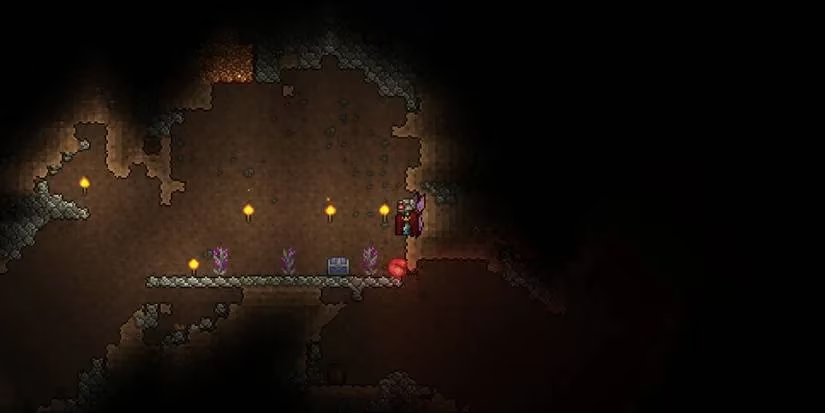
Light is a non‑issue—torches, glowsticks, lava lamps, none of it matters to a Gemcorn. The trees don’t photosynthesize the way surface flora does; they’re made of stone, after all. So players can light up their underground orchard like a disco without hampering growth. The real kicker, however, is spacing. A Gemcorn sapling needs at least three blocks of clearance on all sides, and the vertical space above should ideally be 16 blocks tall. Any less, and the tree will either grow at a glacial pace or produce a stunted version that yields fewer gems. Cramming saplings together like sardines is a sure‑fire way to end up with a barren field of disappointment.
The blocks beneath the sapling must be natural Stone Blocks—no dirt, no mud, no fancy marble. This might require a bit of landscaping, which is a posh term for “digging out an absurdly large rectangle of rock.” A perfectionist might even line the entire farm with background walls to prevent mob spawns, but they must leave the two tiles directly behind each sapling untouched, otherwise the tree throws a tantrum and refuses to grow.
.jpg?q=50&fit=crop&w=825&dpr=1.5)
So, how long does a Terrarian have to twiddle their thumbs before their Gemcorns transform? The answer is: as long as a piece of string. Sometimes a tree springs up in a single in‑game day; other times, it drags its feet for several. Patience is a virtue, and in this case, it’s also a necessity. If one tree has already decided to show off, the rest are likely just fashionably late. Freaking out is not advised.
Now, the million‑gold‑coin question: are Gemcorns actually worth the hassle? In the early game, they are an absolute boon. A steady supply of gems means players can craft a Gem Staff, one of the spicier mage weapons before Hardmode, or a gem hook for stylish grappling. More importantly, gems can be sold for a tidy profit. Diamonds and Amber fetch the highest price, so savvy farmers often prioritize those. Even leftover Gemcorns are worth the same as the gem they’re made from, so nothing goes to waste. Setting up even a modest farm can bankroll that crucial early‑Hardmode shopping spree, whether it’s Leaf Wings or a Mountain of Healing Potions.
When things go wrong—and they will—the checklist is mercifully short. Ask: is the sapling in the Underground or lower? Is it on a Stone Block? Is there at least three blocks of space between each sapling? Is there a whopping 16 blocks of headroom? If any answer is “no,” then the Gemcorn is simply exercising its right to be stubborn. Some players like to hollow out a vast cavern, plant rows of Gemcorns with generous spacing, and then go off to fight bosses while the trees do their thing. It’s basically passive income, Terraria style.
As of 2026, the Gemcorn system remains one of the most delightful additions to the game’s sandbox, offering a perfect blend of patience, planning, and payoff. It turns the drudgery of mining into a serene gardening experience—albeit one that takes place hundreds of feet below the surface, in pitch‑black caverns, surrounded by the distant chittering of cave bats. Who knew tree‑hugging could be so profitable?