
In early 2021, Andrew Spinks, the creator of the beloved survival-crafting game Terraria, found himself locked out of his personal Google account with no clear explanation. After three long weeks of appeals, support tickets, and agonizing silence, he made a decision that sent shockwaves through the gaming community: he publicly canceled the planned Terraria port for Google Stadia.
The trouble had actually started weeks earlier. The official Terraria Twitter account had reached out to Team YouTube after noticing that its channel had been disabled following an apparently erroneous claim of a Terms of Service violation. Although the channel remained public and its catalog of videos was still intact, the team could no longer access the account. What followed was a painfully generic and public experience with YouTube customer support. Representatives seemed unable to understand exactly what had gone wrong, and the conversation eventually stalled without any meaningful resolution.
For Spinks, the personal side was even worse. His own Google account had been locked for more than three weeks, cutting him off from Gmail, Google Drive, and YouTube access. He insisted he had done nothing to violate Google's Terms of Service and had exhausted every available resource trying to get help. The lack of response pushed an independent developer with a passionate community to the breaking point.
Then came the dramatic announcement. On his personal Twitter account, Spinks declared that he would not be doing business with a corporation that, in his view, valued its customers and partners so little. His words left little room for interpretation: "I will not be involved with a corporation that values their customers and partners so little. Doing business with you is a liability."
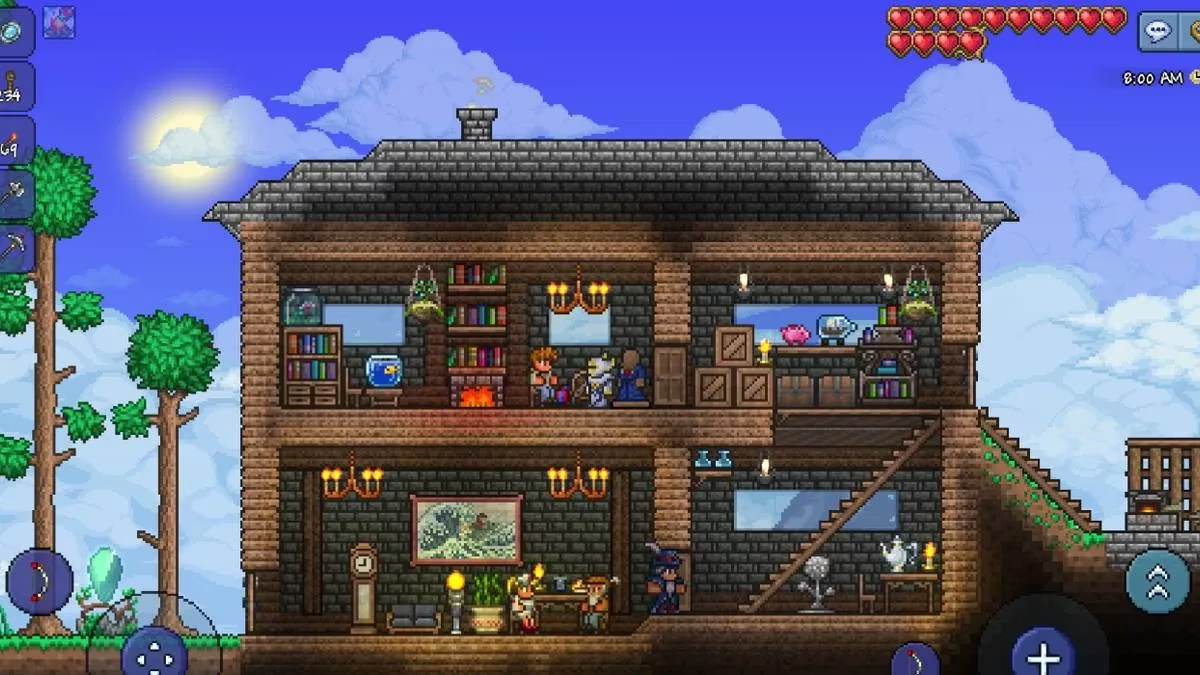
It was a bombshell for fans who had been eagerly awaiting Terraria on Google's cloud-gaming service. Terraria had spent a decade building one of the most dedicated communities in gaming. Even after its purported final major update, Journey's End, players continued to pour hundreds of hours into mining, building, and battling across multiple platforms. The thought of exploring those pixelated depths through Stadia's streaming technology had seemed exciting, but now that future was gone before it ever began.
The cancellation also raised uncomfortable questions for Stadia. Google had recently announced the shutdown of all first-party development for the platform, leaving third-party support as the lifeblood of the service. Titles like Cyberpunk 2077 and Red Dead Redemption 2 had showcased what Stadia could do when big third-party releases worked well. If a beloved indie developer felt driven away by poor support, what message did that send to other small studios?
Of course, one canceled indie port was never going to bring down a tech giant. But in the growing cloud-gaming race, perception mattered. Competitors such as GeForce NOW and Xbox Game Pass were gaining momentum, and Google needed every developer and fan it could keep. Was it wise for a platform already losing first-party momentum to risk alienating a creator with such a loyal following?
Looking back from 2026, the Stadia saga offers a clear lesson. Google Stadia ultimately shut down in January 2023, and Terraria never arrived on the service. Spinks's public dispute became one of the early warning signs of a platform struggling to convince both players and developers that it was built to last. Could a more responsive support system have saved the port? Could a simple act of listening have prevented such a public fracture?
The answers remain speculative, but the outcome was undeniable. A developer who had spent years nurturing one of the most successful indie games ever made decided that walking away was safer than continuing to trust a corporation that had locked him out without explanation. In a creative industry built on trust, passion, and community, that kind of rupture can be impossible to repair.
Terraria continues to thrive across many platforms, reaching new players and welcoming back veterans. Google Stadia, however, is now a chapter of gaming history rather than a living service. The story of the canceled port is a reminder that behind every game lies a human creator, and when those creators are ignored, the consequences can echo far beyond a single unsent email or a locked account.