
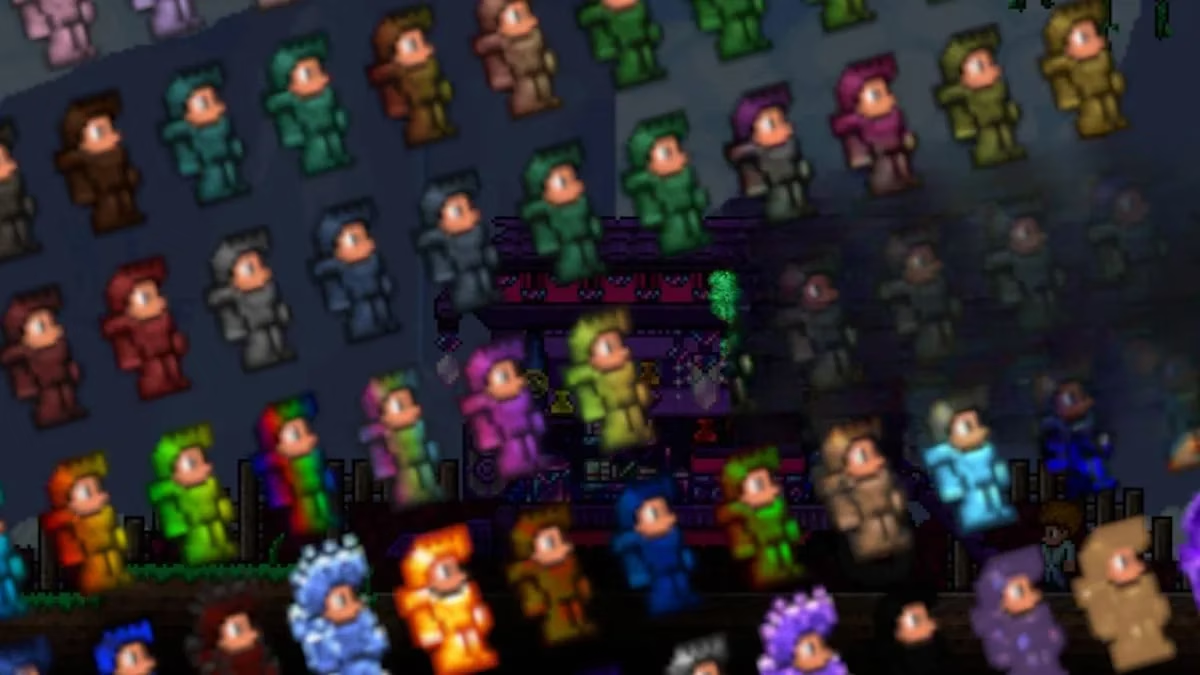
In the sprawling, pixelated wilderness of Terraria, a traveler quickly learned that survival was not only measured by swords and shields, but also by how confidently a character could stride through a forest wearing armor that looked like a sunrise trapped in metal. The world offered countless ways to fight, build, and explore, yet one quiet system turned even the most practical equipment into a canvas. Dyes, those small chromatic vials of transformation, worked like a second skin of stained glass, letting a player change the color of armor, vanity pieces, and accessories without sacrificing a single point of defense.
Dyes functioned less like consumable items and more like equipment in their own right. Each armor piece and vanity item contained a third slot reserved specifically for dye, meaning a color could be slipped in or removed as easily as changing one's mind before a boss fight. A player who enjoyed matching their crimson breastplate to the red glow of an underworld lava lake could keep several dyes close at hand, switching between them whenever the terrain demanded a new mood.
The Dye Trader and the Strange Plant
Before any of this color could exist, a peculiar merchant had to appear. The Dye Trader was one of the NPCs introduced during Terraria's update 1.2, and he did not simply walk into town because a house was empty. He waited for proof that the player cared about the stranger corners of the world. That proof came in the form of a Strange Plant, a rare botanical curiosity that served as a passport into the Dye Trader's chromatic market. Once a player held that odd little plant in their inventory, the trader would take up residence in a suitable home, ready to sell basic dyes and the all-important Dye Vat for five gold each.
The Dye Vat itself was more alchemist's cauldron than ordinary crafting station. It allowed raw materials gathered from across the map to be crushed, steeped, and transformed into liquid color. It also served as a mixing chamber, where existing dyes could be combined into gradients, bright versions, and animated hues that pulsed like the heartbeat of a distant star.
The Basic Palette
Across Terraria's many biomes, the ingredients for basic dyes hid in plain sight. A forest floor might offer Green Mushrooms, while a desert held Orange Bloodroot or Pink Prickly Pears. Some materials required a sharp eye near water, caves, or corrupted ground. The base colors formed the foundation of the entire dye system.
| Color | Source Material |
|---|---|
| Red | Red Husks |
| Orange | Orange Bloodroot |
| Yellow | Yellow Marigold |
| Lime | Lime Kelp |
| Green | Green Mushroom |
| Teal | Teal Mushroom |
| Cyan | Cyan Husk |
| Sky Blue | Sky Blue Flower |
| Blue | Blue Berries |
| Purple | Purple Mucos |
| Violet | Violet Husk |
| Pink | Pink Prickly Pear |
| Black | Black Ink |
These simple colors were only the beginning. The Dye Vat could combine them into more complex creations, and each Strange Plant traded to the Dye Trader became a roll of the dice in a lottery of rare and unpredictable shades. One day the plant might return a deep gradient that shifted from violet to black; another day it might produce a hue that shimmered like oil on water. The game contained a grand total of 65 different colors and combined dyes, a number large enough to make even the most dedicated collector pause.
Mixing and Brightening
Mixing dyes followed a logic similar to blending paints, though with the added surprise of Terraria's magical ingredients. For example, combining Yellow, Lime, and Orange Dyes in the Dye Vat produced a Yellow Gradient Dye. A player who wanted their armor to gleam under torchlight could take any color and mix it with Silver Dye, which was only available from the Dye Trader, creating a Bright version of that color. This did not improve a player's building skills or make a sword hit harder, but it did make the character look cooler, and in a game where style often walked hand in hand with legend, that was cause enough.
The process also changed the relationship between players and their environments. Gathering materials for dye turned a routine walk through the forest into a scavenger hunt. A patch of Blue Berries was no longer background decoration; it was the missing note in a visual symphony. The Dye Trader's arrival turned a simple wooden house into a workshop of color, and the Dye Vat hummed with the quiet promise that no two adventurers needed to look the same.
A Style of Its Own
In the end, Terraria's dye system offered something beyond utility. It allowed a player to turn armor into a personal signature, a walking declaration that they had not only conquered the world, but had done so with a particular shade of cyan glowing along their shoulders. As of 2026, the game's long-lived 1.4 era continued to reward those who looked closely at the ground for strange plants and rare pigments, proving that even in a realm of cosmic horrors and mechanical bosses, there was always room for a little more color. 🎨✨